

Cortisone injection is one of the most commonly used treatments in podiatry to relieve pain and reduce inflammation caused by various foot and ankle conditions. Whether it is a persistent tendonitis, a painful bursitis, or plantar fasciitis that does not respond to conventional treatments, cortisone is often an effective therapeutic option for restoring comfort and mobility in everyday life.
However, despite its common use in podiatry offices, this treatment is still surrounded by many misconceptions. Some patients fear its side effects, others doubt its effectiveness, and many do not fully understand how it actually works. These beliefs, often fueled by incomplete or outdated information, can lead to unjustified refusals of treatment — to the detriment of patients’ health and quality of life. At Podiatrique Duvernay, we believe that every patient deserves clear, honest information grounded in clinical practice. Our approach is based on listening, transparency, and personalized care. With that in mind, we wrote this article: to give you a realistic and complete view of what a cortisone injection really is, its benefits, its limitations, and how it can fit into an overall treatment plan tailored to your situation.
Whether you are considering this treatment for the first time or simply want to better understand one you have already received, this guide walks you step by step through six essential facts about cortisone injections in podiatry.
1. The effectiveness of a cortisone injection depends on several factors

The effectiveness of a cortisone injection cannot be generalized to all patients or all conditions. It varies according to three main factors.
The type of condition being treated
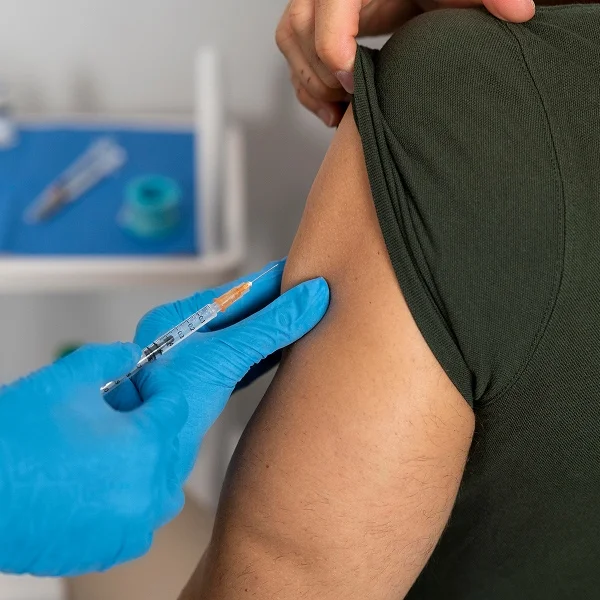
Acute inflammatory conditions, such as tendonitis or bursitis, usually respond well and quickly to the injection. Pain often decreases within a few days, sometimes even within a few hours. By contrast, chronic conditions such as arthritis or plantar fasciitis may require a longer delay before showing noticeable improvement. In these cases, the injection is part of a broader treatment plan rather than a stand-alone solution.
The location of the injection
Injection precision is crucial. Certain anatomical areas, such as the small joints of the foot or deep tendons, require advanced clinical expertise. The use of image-guided techniques — such as ultrasound — can significantly improve accuracy, reduce risks, and optimize outcomes for the patient.
The individual response to treatment
Every body responds differently to cortisone. Age, general health, medical history, and even certain genetic factors can influence the response to treatment. That is why a personalized assessment is always performed before any injection at Podiatrique Duvernay.
2. The effects are not always immediate — and that is normal
Many patients expect relief within the first few hours after the injection. While that can happen in some acute cases, it is not the norm. For a recent bursitis or tendonitis, relief may indeed appear within 24 to 48 hours. For more established conditions, such as arthritis or chronic plantar fasciitis, the beneficial effects may take several days, or even two to three weeks, before being fully felt. This delay does not mean the treatment is ineffective — it simply reflects the body’s natural process of reducing inflammation in the tissues.
3. An injection relieves symptoms, but does not always cure the problem permanently
Cortisone injection is a powerful tool for controlling pain and inflammation, but it is not necessarily a permanent solution. For many patients, relief lasts from several weeks to several months. In some cases, repeated injections may be considered to maintain comfort in daily life. It is important to understand that cortisone treats the inflammatory symptom, but not always the underlying cause. That is why it is most often integrated into a comprehensive treatment approach, combining physiotherapy, orthotics, or lifestyle changes depending on the case.
4. Side effects are rare and often overstated
Fear of side effects is one of the main reasons some patients hesitate to choose this treatment. In reality, when administered by a qualified professional, cortisone injections are generally well tolerated. The most common side effects — mild pain at the injection site or temporary redness — are minor and disappear within a few hours. More serious complications, such as skin atrophy or infection, are rare and occur mainly when the technique is inadequate or the injections are too frequent. At Podiatrique Duvernay, every injection is performed in strict accordance with clinical protocols to ensure your safety.
5. Cortisone does not cause dependency
Contrary to a very common misconception, locally injected cortisone is not an addictive substance. The body does not develop physical dependence or pharmacological tolerance to this treatment. If some patients want the injection again when symptoms return, it is not a sign of addiction — it simply means the treatment worked well and they want to regain that comfort. The number of injections per site is, however, medically limited in order to preserve tissue integrity over the long term.
6. Cortisone injections are even more effective when combined with other treatments
Cortisone injections produce better results when they are part of a broader therapeutic approach. On their own, they reduce inflammation and ease pain — which is already valuable. But when combined with other treatment modalities, they can speed up recovery and help prevent recurrence. Physiotherapy, for example, helps strengthen weakened muscles and tendons. Wearing custom orthotics helps correct biomechanical imbalances that are often at the root of the pain. Changes in physical activity or footwear can also play a decisive role in the long-term success of treatment. At Podiatrique Duvernay, every treatment is designed around your specific situation. Book your appointment today to speak with one of our podiatrists and find the solution best suited to your needs.
 imunify-bot-check